You're One Algorithm Change Away from Losing Everything You Built
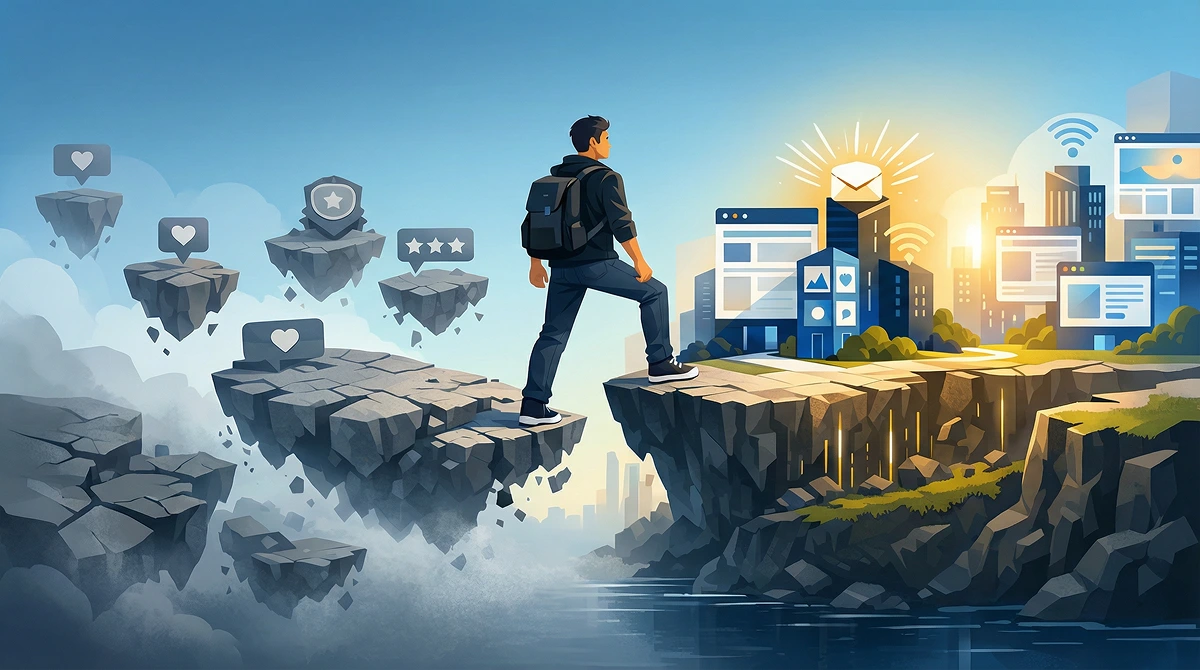
Let me paint you a picture.
It's a Tuesday morning. You open your laptop, coffee in hand, ready to check on a proposal you sent the night before. You log into your account. Something's off. A red banner sits at the top of the screen.
Your account has been flagged for review.
No warning. No explanation. Just a message telling you to contact support — the same support that takes four business days to reply with a copy-pasted response.
Three years of reviews. Hundreds of completed orders. A Top Rated badge you worked nights and weekends to earn.
Gone. Or at least, suspended in limbo while a faceless algorithm decides the fate of your income.
Here's the uncomfortable part: this isn't a horror story. This happens every single week to freelancers across every major freelance marketplace and social platform out there. And the worst part? Most of them never saw it coming — because they were too busy building on land they never owned.
The Rented Land Nobody Warns You About
When you first started freelancing, the platforms made complete sense. Low barrier to entry. Built-in traffic. A ready audience of buyers actively searching for exactly what you offer. You didn't need a business plan. You just needed a good profile picture and a sharp service title.
And honestly? That was smart. Freelance marketplaces are genuinely powerful launchpads.
The trap isn't using them. The trap is never leaving the launchpad.
Here's something nobody says out loud in the freelance communities: every profile you build on a third-party platform is a business you're operating on rented land. You don't own your audience. You don't own your reviews. You don't control who sees you, when they see you, or whether they see you at all.
Freelance marketplaces can change their fee structure overnight — and they have. Job platforms can shift their ranking algorithm — and they do. Social media can throttle your organic reach — and it already has. Your entire digital presence is one policy update away from becoming irrelevant.
You didn't build a business. You built a very impressive room inside someone else's building.
The Moment Something Shifts in Your Head
It happens differently for different freelancers. But it always happens.
For some, it's the moment a client asks: "Do you have a website I can check out?" — and you hesitate before sending your marketplace profile link. Not because it looks bad. But because somewhere in the back of your mind, you already know it doesn't look like someone who owns their work.
For others, it's when a platform quietly rolls out a new commission structure and you do the math and realize they're now taking more from you than your last full-time employer did.
And for some, it hits hardest when they see a newer freelancer with fewer skills and less experience outranking them in search results — simply because the algorithm decided to favor fresh profiles that week.
These aren't inconveniences. These are symptoms. Symptoms of a freelance career that has grown real skill, real experience, and real results — but still has no independent foundation to stand on.
What a Digital Landmark Actually Is
Let's get concrete about something.
A digital landmark is an online asset you own completely — one that works for you around the clock, without depending on a platform's permission, algorithm, or fee structure.
Your personal website is a digital landmark. A blog that ranks on search engines for terms your ideal clients are actively searching is a digital landmark. An email list of 500 people who signed up because they found your content genuinely useful — that is one of the most powerful digital landmarks a freelancer can build.
The difference between a platform profile and a digital landmark comes down to one word: ownership.
When someone finds you through your website, no platform takes a cut. When a client searches for exactly the specialist you are and your website appears — that lead is yours. When you send an email to your list, no algorithm decides who gets to see it. You have a direct line to your audience that nobody can throttle, suspend, or monetize against you.
This is what the most sustainable freelancers figured out. Not that platforms are bad — but that platforms should be one of many channels, not the only channel.
Two Freelancers. Five Years Apart.
Imagine two freelancers who both started in the same year with the same skill set.
Freelancer A doubled down on marketplaces. Optimized every listing. Collected every review. Built a strong reputation — entirely inside ecosystems controlled by other companies. Five years later, they're still great at what they do. But they're also still dependent on the same platforms, still subject to the same fees, and still one bad month of algorithm changes from a serious income crisis. Their rate is capped by what the platform's market will bear. Their growth is capped by how much time they can trade.
Freelancer B used platforms to get started and to fund something bigger. They built a personal website in year one. Nothing fancy — a clean portfolio, a clear positioning statement, a contact form. They wrote a few articles about their craft. Over time, search engines started sending them traffic. They added a simple newsletter. Clients began coming to them organically. By year three, inbound inquiries outnumbered marketplace clients. By year five, they'd stopped chasing work entirely. The website was doing it for them.
Same skill. Same starting point. Completely different leverage.
The only real difference? One freelancer built on rented land. The other built something they owned.
How to Start Building Without Burning Down What's Working
Here's the practical truth: you don't have to blow up your marketplace presence to start building your own. You just need to start planting seeds in soil you actually own.
Start with a personal website. It does not need to be perfect. It needs to exist. A clean homepage with your name, your positioning, what you do, who you help, and your best work. That's it. That's the foundation. A strong freelancer portfolio website establishes your identity outside any platform's branding.
Make it findable. Think about how your ideal client searches. What do they type into a search engine when they need someone like you? Build a page or write a piece of content around that. This is the beginning of your freelancer digital presence generating organic leads — people who were never on a marketplace, who would never scroll through a job board, but who typed a question into a search bar and found you.
Collect emails from day one. Not aggressively. Just offer something useful — a checklist, a short guide, a resource relevant to your niche — and invite people to subscribe. An email list is the most resilient digital asset a freelancer can own. Algorithms can't touch it.
Publish what you know. Not to become an influencer. Not to go viral. But because content is leverage. One well-written article about a problem your clients commonly face can generate qualified inquiries for years. Your freelance personal brand grows not from broadcasting, but from being genuinely useful in writing, in public, in a place you own.
What Happens When Clients Find Your Website First
There's a quiet authority that happens when a client finds you through your own website rather than a marketplace listing.
The dynamic shifts. You're not one of forty freelancers they're comparing by price. You're the person they sought out. Your website tells a story that a platform profile structurally cannot tell. It shows how you think, what you value, the caliber of work you do — without the visual noise of competitor ads sitting right next to your name.
Clients who come through your website arrive pre-sold. They've already decided they want to work with you before they even hit the contact button. That changes what you can charge. It changes the quality of conversation. It changes everything about how you build a freelance business online.
The Realization That Changes Everything
Here is the truth that most freelancers only discover after something goes wrong:
The skills you've built are genuinely yours. The expertise is yours. The results you've delivered for clients — those are yours. But if the only proof of all that work lives inside platforms you don't control, you haven't built a business yet.
You've built a career that belongs to someone else's infrastructure.
A personal website isn't a vanity project. It isn't something you build once you "make it." It is the thing that makes the difference between a freelancer who is always one rule change away from starting over — and a freelancer who has built something that compounds, grows, and generates opportunity independently.
If your entire freelance career can disappear because a company halfway across the world changed a policy on a Wednesday afternoon, you don't own a business yet.
You own a very fragile job.
The good news? That can change. And it starts with one owned URL, one clean page, and the decision to stop building exclusively on land that was never yours to begin with.
If this landed for you, share it with a freelancer who needs to hear it. And if you're ready to start building your own digital landmark — the best time was when you started freelancing. The second best time is today.
Ceyonra Team
Helping businesses scale with software.